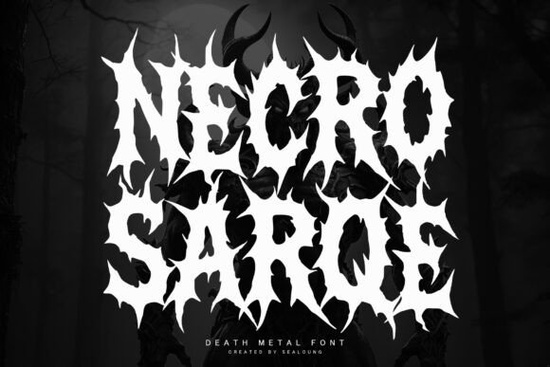
If you need a typeface that captures the raw, unfiltered energy of extreme music or dark graphic projects, Necrosarqe Regular Font offers a straightforward solution. This blackletter style relies on jagged, thorn-like edges and uneven strokes that mimic natural decay and hand-carved metal posters. Rather than relying on polished symmetry, the letterforms lean into aggressive silhouettes and rough textures that immediately signal intensity. For designers, crafters, and print-on-demand sellers working with underground aesthetics, this font delivers the visual weight needed without requiring extra manual distortion.
How do jagged blackletter styles improve dark design projects?
When working on band logos, horror merch, or underground event flyers, readability often takes a backseat to atmosphere. Yet, even the most extreme typefaces need to communicate clearly at a glance. The uneven structure creates a chaotic visual rhythm that feels authentic to the death metal scene. Instead of flat digital curves, the strokes taper into sharp points that resemble thorny roots or weathered iron. This organic roughness helps your layout feel handcrafted rather than generated. You can maintain legibility by increasing letter spacing slightly and keeping text blocks short. Pairing heavy display text with clean, minimal backgrounds allows the typeface to breathe without overwhelming the viewer.
What types of print and digital products suit this aesthetic?
Small businesses and independent artists frequently look for typography that aligns with specific subcultures. Here are a few practical applications where this style performs well:
- Band branding and album covers – Heavy music visuals benefit from aggressive, high-contrast lettering that stands out on streaming thumbnails.
- Horror and thriller posters – The sharp, thorn-like terminals create instant tension, making them ideal for event promotions.
- Streetwear and merchandise – Screen-printed tees and patches hold ink well when using bold shapes derived from this structure.
- Zines and underground publications – The gritty texture pairs naturally with photocopy effects and distressed paper backgrounds.
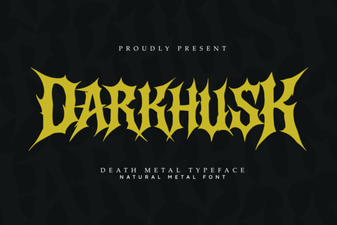
If you need to review the full character set before committing, the product overview page provides clear previews. You might also compare this to the more structured approach of Darkhusk that keeps edges slightly rounded for better readability.
How should you pair and format aggressive display fonts?
Display typefaces with heavy weights and irregular strokes require careful handling. Overcrowding a layout with large, jagged characters will make the design feel cluttered. Start by treating the font as a visual anchor, not a body text replacement. Use it for headlines or central logos, then balance it with a neutral sans-serif for supporting information.
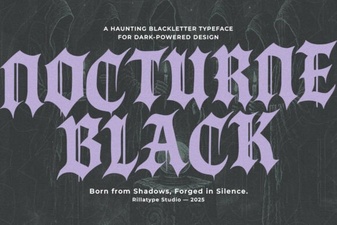
When setting up your file, avoid extreme scaling. Enlarging low-contrast strokes beyond a certain point can blur the thorn details. Instead, keep your main text between 36pt and 72pt for print. Add a subtle drop shadow only if your background contains high-frequency noise. For those who prefer softer atmospheric type, the Nocturne Black style might fit your specific layout better.
What technical considerations matter for crafting?
Crafters and sellers should always test a font on actual materials before committing to a large run. Screen printing and laser etching react differently to sharp, irregular edges. For vinyl cutting, simplify the inner counters to prevent fine details from breaking. The chaotic texture works beautifully for digital mockups, but physical production benefits from slight smoothing at very small sizes. If you are exploring heavier historical references, you can check out Roslenk Volume 2 for layout inspiration.
What should you check before finalizing your layout?
Before sending files to production or publishing your design, run through a quick quality check. This saves time, reduces reprints, and keeps your typography sharp:
- Convert all text to outlines before exporting to avoid substitution issues.
- Zoom to 400% and inspect the thorn-like edges for overlapping paths.
- Print a grayscale proof to ensure contrast remains strong.
- Test readability at thumbnail size for online storefronts.
- Verify commercial licensing when selling on physical goods.
For a deeper understanding of how historical scripts influence modern subculture visuals, you can review this reference guide on gothic typography to understand the evolution of heavy letterforms. Start by applying the font to a simple headline, adjust tracking until the sharp edges feel balanced, and build your layout outward. Keeping your hierarchy clear and your textures intentional will ensure the design feels powerful without losing its practical function.
Download Now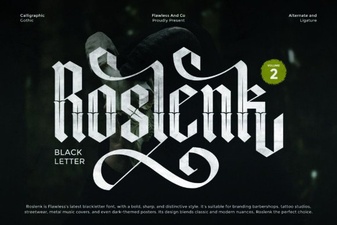 Roslenk Volume 2 Font: Design and Project Ideas
 Darkhusk Font: Creative Design Inspiration
 Nocturne Black: Font Styles for Creative Design
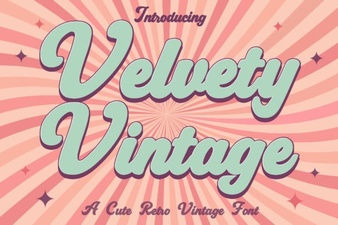 Craft Vintage Charm with Velvety Fonts
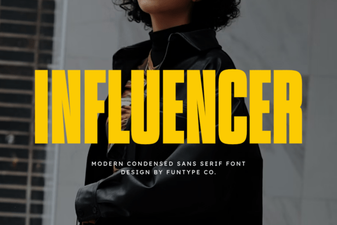 Free Download: Creative Influencer Fonts for Social Media
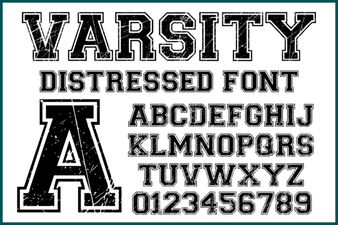 Distressed Fonts for Bold Design Projects